BMC Safety Directive Puts Construction Risk Management in Focus
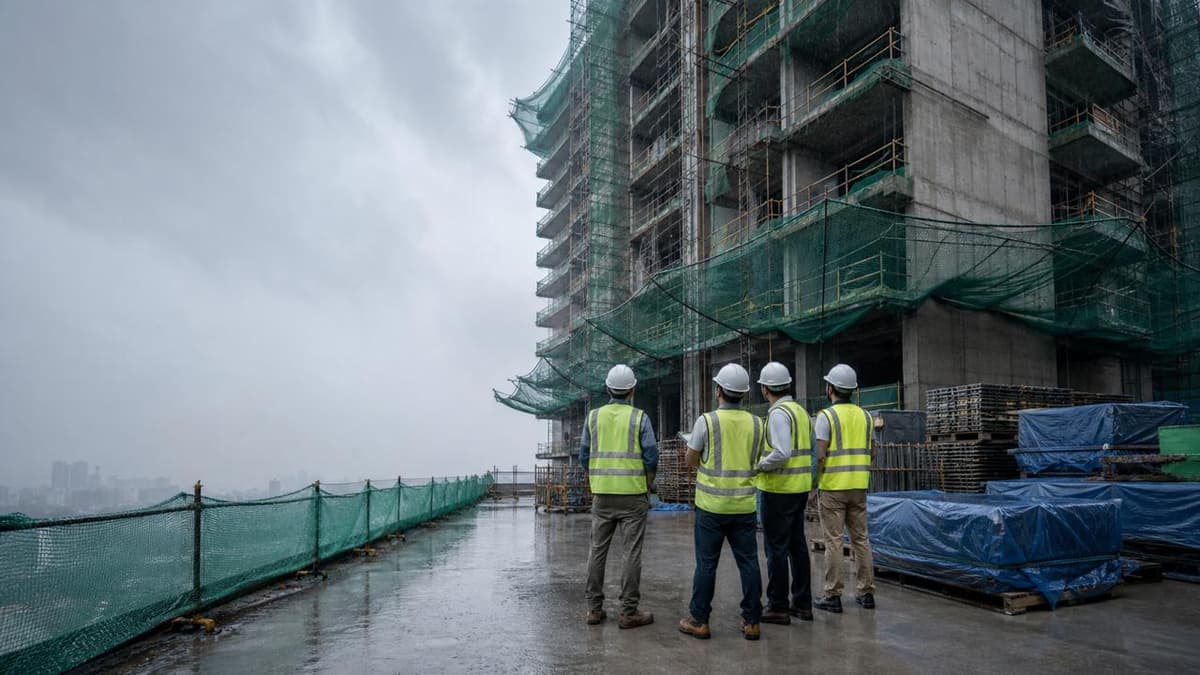
Mumbai’s civic body has directed developers, contractors and project teams to suspend hazardous construction activity during periods of severe rainfall and strong winds.
For developers and channel partners, the direction is a practical reminder that safety systems must be built into every stage of construction. Work at height, crane operations, excavation, scaffolding, material storage and temporary site structures require closer monitoring when weather conditions deteriorate.
The impact on project schedules is likely to vary from site to site. Well-planned projects typically account for monsoon-related disruptions through sequencing, material protection and contingency planning. The challenge is not only to pause risky activity when necessary, but also to restart efficiently once conditions permit.
For brokers, this is an important issue to communicate clearly to buyers. A temporary safety stoppage should not be presented as a project failure. Instead, it reflects compliance with responsible site-management practices. At the same time, developers must maintain transparency if weather conditions have a material impact on construction milestones.
The directive also places additional focus on project leadership. Developers, architects, engineers and contractors must ensure that safety decisions are taken quickly and consistently, particularly in dense urban areas where an incident can affect workers, residents and public movement around the site.
The larger message is clear: construction velocity cannot come at the cost of safety. In Mumbai’s monsoon environment, strong risk management is an essential part of delivery credibility.